Walker, rollator or transport chair: understand the differences
When someone asks for a walker with a seat, they may mean a place to pause while walking, or a chair another person can push. Those are different jobs. Start by describing the job in ordinary language before choosing a product name. This guide explains the categories and the practical checks to discuss with your care team and equipment supplier.
In short
Start with the job you need the equipment to do, then compare the type, exact model and practical fit. Keep clinical suitability with your care team.
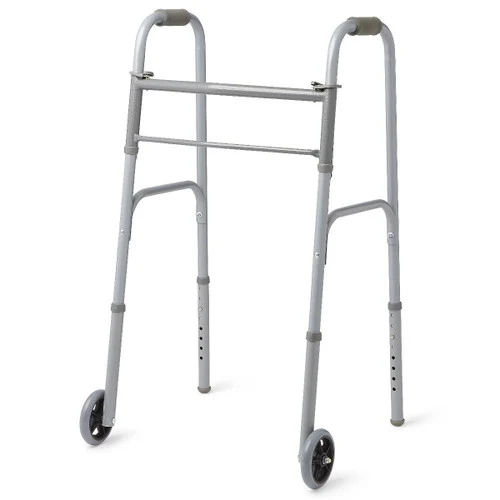
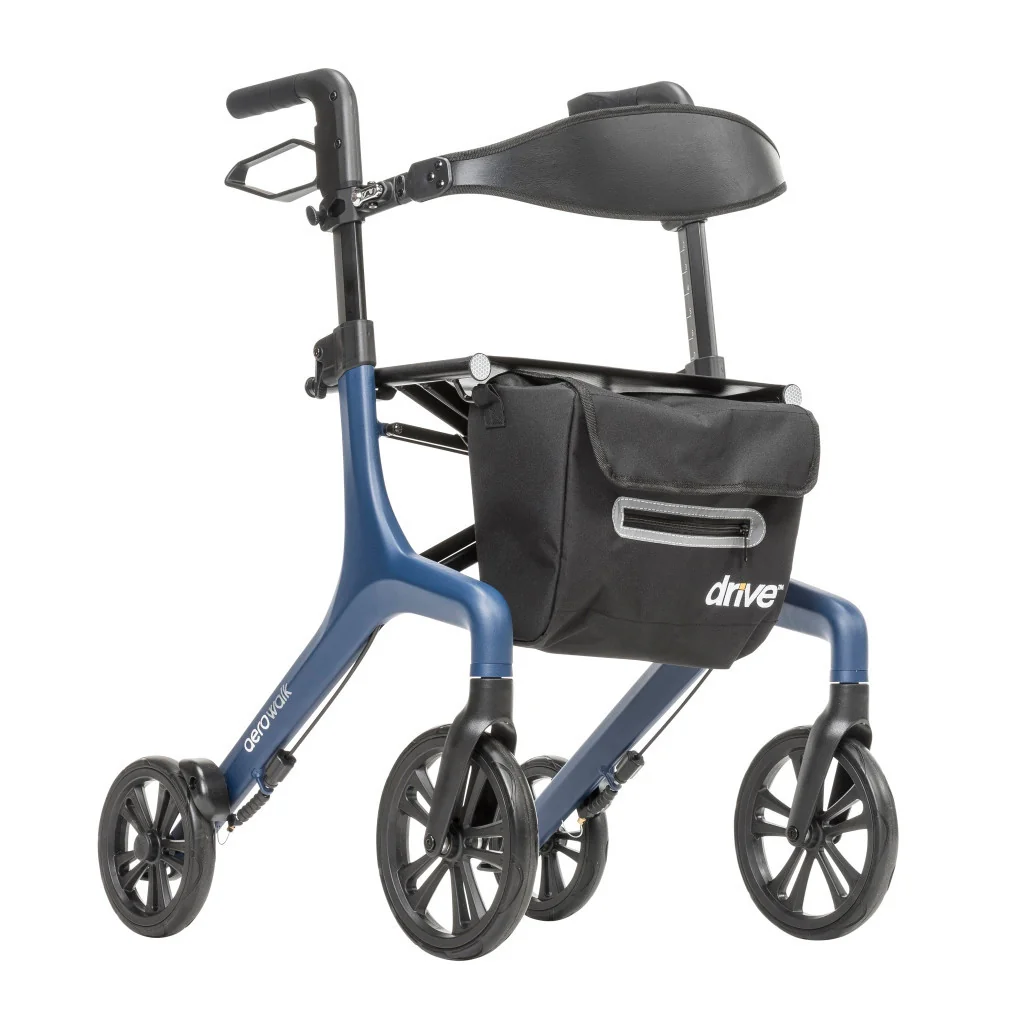
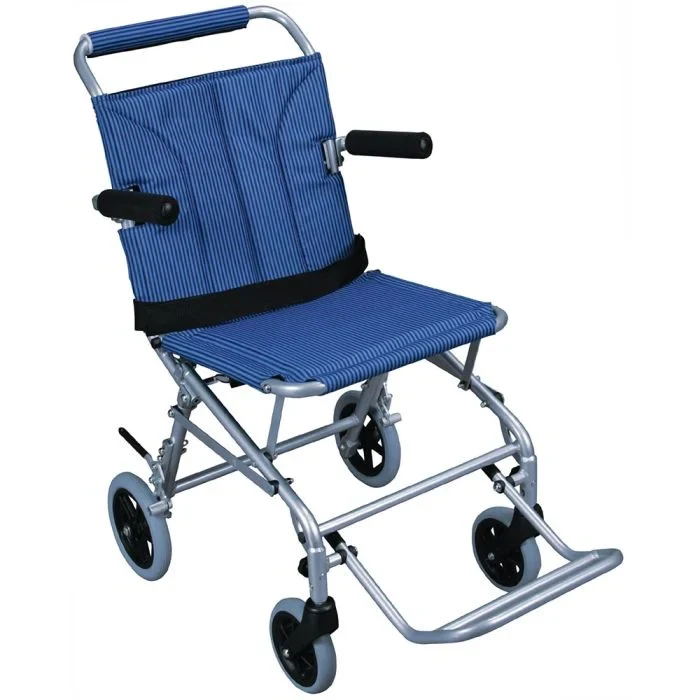
Walker or rollator: how the frame moves
A standard walker has a frame with legs; two-wheel walkers add wheels at the front. A rollator has three or four wheels and hand brakes, often with a seat. The names overlap in everyday shopping, so check the actual design rather than relying on the phrase rolling walker. Your clinician or therapist can help establish which type is appropriate.
Once the type is settled, compare what you will actually handle. Can the user comfortably reach and operate the controls? Does the handle adjustment include the setting recommended for them? If there is a seat, what are its height, width and stated limit? A product's overall weight and its user-weight limit answer different questions.
Transport chair or wheelchair: who provides the movement?
A transport chair depends on another person to push it. A self-propelled manual wheelchair uses large rear wheels the seated person can operate. That distinction matters before comparing folding styles or prices: a caregiver-pushed chair does not provide independent hand-rim propulsion.
Say whether the chair will be used around the home, for appointments, or for longer periods, and who will be present. Have seating and suitability checked by the appropriate professional. For the practical comparison, record seat dimensions, overall width, footrest arrangement and the weight the person loading the car will actually handle.
A rollator seat is not automatically a transport seat
Do not have someone push an occupied rollator unless that exact device is designed and approved for that use. Standard-rollator manuals can prohibit moving it while someone is seated. Purpose-built combination rollator/transport chairs exist, but their instructions and conversion requirements are different.
If you want both functions, ask the supplier to identify the exact combination model and show the relevant instructions. Do not treat a seat, a reversible backrest or an online search label as proof that an ordinary rollator can carry a passenger.
Will it work in your home and vehicle?
Write down the narrowest clear opening on the route you need to use, including the bathroom. Also note tight turns and thresholds. Compare those measurements with the equipment's overall dimensions, not just its seat width. Ask about a supervised fit check when the route or handling is uncertain.
For the car, measure the cargo opening as well as the space inside. Ask whether the listed weight is the complete item or a transport configuration with parts removed. The person who will normally load it should be part of that conversation. Ask for a demonstration of folding, securing loose parts and reopening it; do not begin with an unsafe lift to see whether it is manageable.
Turn the comparison into a useful local visit
Bring the equipment type recommended by your care team, your home and vehicle measurements, and the name of whoever will help. Shortlist exact models rather than broad labels such as lightweight or bariatric. Ask which models can actually be viewed, what the quoted package includes, and whether the requested item is available for your needed date.
The examples here are a starting point for that conversation, not a live stock list or a clinical recommendation. Contact Hunt Club before making a special trip, and keep a written record of the model and arrangement confirmed for you.
Sources behind the differences
Manufacturer information checked October 21, 2026. These category explanations are not a clinical recommendation or a live inventory list. Follow the instructions for your exact device.
Drive Medical: walkers and rollators
Medline: equipment product guide